Written By: Karim Kaifi – Pet Owner &Pet Care Writer
Reviewed by: Dr. Hussain Ali, DVM
Updated April 22, 2026
Taking Care of a Pitbull Puppy
Taking care of a Pitbull dog is a critical responsibility of the owner. Why? It requires commitment, planning, and early socialisation to raise a Pitbull puppy. These kind but powerful dogs flourish in settings that provide regular training, a supportive emotional environment, and healthy food.
Quick Summary
- Puppy-proof your home before bringing your Pitbull puppy in
- Feed high-quality, protein-rich puppy food 2–4 times a day
- Start training and socializing at 8 weeks
- Keep up with vet visits, vaccines, and flea/tick prevention
- Provide daily exercise and bonding time to build trust
Table of Contents
1. Getting Ready for the Homecoming of Your Pitbull Puppy
Prepare your home for them, just like you would for any puppy. Having the right equipment makes the adjustment process easier for you both.
First, it’s exciting to have a Pitbull puppy, but it also takes a lot of planning. Because curious toddlers will chew on anything they can reach, you need to remove or secure:
- Safety gates
- Poisonous plants
- Dangerous electrical cords
to keep the dog out of unsafe places. You need to put away anything that seems like it could be eaten, such as shoes and remote controls.
Here is a list of things you should always have on hand:
- Recommended puppy food by veterinarians
- Water and food bowls made of stainless steel
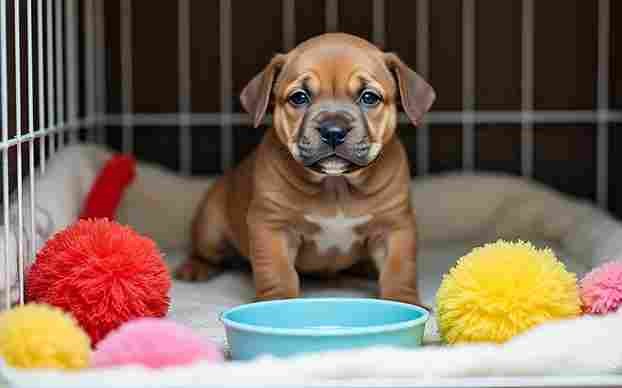
- A cosy crate with plush bedding
- Long-lasting teething chew toys
- Shampoo and grooming supplies that are safe for puppies
- An ID-tagged collar, a leash, and a harness
Trust and routine are established from day one in an environment that is transparent, orderly, and safe.
2. Giving Your Pitbull Puppy the Right Food

They need a high-protein, well-balanced diet for the best possible muscle growth and development. Clean water at all times and scheduled feedings are crucial.
Particularly in their first year, Pitbulls experience fast growth spurts that necessitate nutrition. Healthy fats, calcium for strong bones, and premium real meat protein (chicken, lamb, or fish) are all found in the best puppy foods. Steer clear of inferior fillers and artificial ingredients.
Feeding Schedule by Age
| Age | Daily Meals |
| 8–12 weeks | Four little meals |
| 3–6 months | Three meals |
| 6–12 months | Two or three meals |
Make sure your puppy always has access to clean water. Steer clear of overeating because obesity can cause joint pain in later life. Observe your veterinarian’s advice regarding portion control, as it should change as your dog grows.(AKC)
3. Medical Care and Veterinary Visits
In addition to providing preventative care like vaccinations, routine veterinary visits can assist in identifying underlying health issues like allergies or dental issues. Long-term health also depends on flea control, deworming, and routine examinations.
According to Dr. Hussain Ali, DVM:
Regular checkups, vaccines, and deworming help protect your puppy from serious health problems. So, it’s best to take your puppy to the vet within a few days of bringing them home.
Three to five days after bringing your Pitbull puppy home, schedule their first visit with the veterinarian. They will receive a customised vaccination schedule, a physical examination, and a parasite screening.
Core vaccinations:
- DHPP (Distemper, Hepatitis, Parainfluenza, Parvo)
- Rabies
Optional:
- Leptospirosis
- Lyme
- Bordetella
Beginning at two weeks, routine deworming is done every month for six months. Preventing fleas and ticks and taking heartworm medication are essential throughout the year if you live in a warm climate.
To manage behavioural issues and avoid unwanted litters, discuss with your veterinarian the spaying or neutering procedures that are usually performed at six months of age.(VCA Animal Hospitals)
4. Training and Socialisation
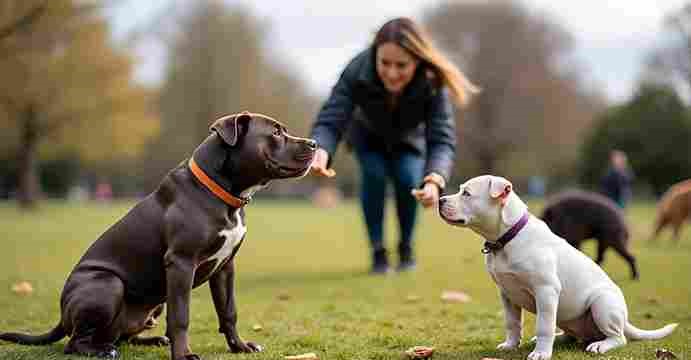
Pitbull puppies are smart, but they need early training.
So, start at 8 weeks with simple commands like sit and come.
At first, keep sessions short and fun. This keeps your puppy interested.
I once helped a neighbor train his Pitbull puppy. At the start, the puppy ignored commands. But after using treats and praise, the puppy learned much faster.
While positively reinforced training emphasises positive behaviour, your dog should begin robust socialisation at a young age. Refrain from reacting aggressively or fearfully to strangers, new pets, or unfamiliar surroundings.
Pitbulls are smart and willing to learn. At eight weeks, begin training them with rewards and praise. Provide them with short, fun sessions that are organised and unambiguous.
Practice these fundamental commands:
- Sit
- Stay
- Come
- Leave it
Strict discipline will only undermine your training efforts. Positive approaches work much better.
Early Socialisation Is Essential
Introduce your puppy to new people, pets, sounds, and surroundings between the ages of eight and sixteen weeks. Visit dog-friendly parks, go for walks, and make new neighbours. Allow them to touch and examine different items. These activities stop aggression that stems from fear.(ASPCA Puppy Behavior Guide)
Read more “How to Crate Train a Puppy at Night”
5. Tips for House Training
Positive house-breaking outcomes can be achieved with a well-defined schedule and a regular routine. Crate training reduces the likelihood of accidents.
Take your Pitbull puppy outside:
- Early in the morning
- Following meals and naps
- Following a game
- Before going to bed
When your pets go potty outside, give them praise and treats right away. This reinforces positive habits. In the event of an accident, follow the prescribed procedure and clean thoroughly without bribery.
Crate Instruction
Dogs have an innate tendency to keep their sleeping areas clean. Instead of using crates as a kind of punishment, use them to encourage self-control. Use a crate with soft bedding that allows the puppy to stand, turn, and lie down comfortably.
6. Mental Stimulation and Exercise for Pitbulls
Pitbull puppies need a lot of mental stimulation, play, and exercise every day. Solving puzzles is one way to counteract boredom and harmful habits.
Even as puppies, Pitbulls are strong, energetic dogs that require mental and physical stimulation.
Exercises to try:
- Two to three times a day, short walks on a leash
- Yard games like tug-of-war and fetch
- Playing obstacles or scaling stairs
Activities for mental enrichment:
- Puzzle toys or frozen Kongs
- Treat-based hide-and-seek
- Playing training games and picking up new skills
Young puppies should not be overexerted, as this can put stress on their developing joints.
7. Pitbull Grooming
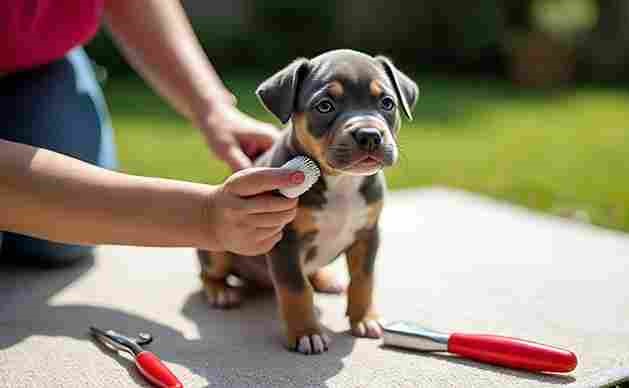
Short-coated puppy Pitbulls are easy to care for, but they still need regular trimming. They stay clean and healthy through brushing, bathing, and nail cutting.
Even though Pitbulls don’t shed much, brushing them once a week helps to get rid of dead hair and increase blood flow. It is advised to give puppies a bath every four to six weeks using mild shampoo.
Other duties consist of:
- Weekly cleaning of the ears is necessary to avoid infections
- Trim the nails as needed, or every two to three weeks
- Teeth: To prevent tartar, brush two to three days a week
In addition to fostering trust, grooming enables you to spot health problems early on, like bumps, scratches, or fleas.
8. Love and Trust
Pitbull puppies form strong bonds with their owners. Because of this, daily interaction is important for their emotional health.
They show affection through calm behavior, closeness, and wanting to stay near their humans.
Pitbulls flourish in homes with regular interaction because of the strong bonds that are formed through daily structure, affection, and companionship.
They exhibit this every day through calm leadership, tender petting, and cuddles because they get emotional and enjoy being near their humans.
Create a schedule for eating, resting, playing, and using the restroom. Their sense of security and safety is increased by structured schedules.
Don’t spend a lot of time alone. Destructive behaviour and separation anxiety are brought on by boredom.
9. Mistakes to Avoid
Behaviour issues result from tedious training that lacks structure and discipline. Establish limits while exercising patience.
The following are some typical errors made by new Pitbull owners:
| Error | Consequence |
| Absence of proactive instruction | Turns hostile or unyielding |
| Strict corrections | Breach of trust and create fear |
| Inaccurate bathroom/feeding schedule | Extended home training |
| Lack of socialisation | Increased apprehension and fear of strangers |
| Separation | Causes boredom and destructive conduct |
To avoid regression, establish boundaries and correct errors with positive reinforcement.
FAQs
Are Pitbulls aggressive by nature?
No. When socialisation and care are done correctly, they will become gentle, loving, and devoted.
What time should training start?
Simple commands can be taught at 8 weeks. Make sure the meetings are fun and short.
Is it normal for my puppy to bite?
Indeed! If they are playing rough, gently tell them to stop and encourage them to use chew toys instead.
Is a Pitbull puppy good for first-time owners?
Yes, but only if you are ready to train and spend time daily.
They need attention, exercise, and proper guidance.
Bonus: Geo-Friendly Advice for Pitbull Dog Owners in Hot and Cold Climates
Adjust care to keep them comfortable based on local weather conditions. These suggestions also apply to preventing summer overheating and winter cold-related problems.
Hot Weather:
- Only take walks in the morning or evening
- Provide shade and fresh water
- Don’t ever leave them in a parked vehicle
Cold Weather:
- Dog sweaters for walks outside
- Steer clear of salt on icy sidewalks, as it can irritate your feet
Disclaimer: This article is for informational purposes only and does not replace professional veterinary advice. Always consult your veterinarian for diagnosis and treatment

Karim Kaifi is an experienced pet owner and writer. He shares practical, research-backed advice based on over 10 years of caring for cats and dogs.
Related posts:
 How to Crate Train a Puppy at Night Time: A Complete Guide for Pet Owners
 How to Help a Puppy Adjust to a New Home: A Full Guide For New Pet Owners
 How to Potty Train a Puppy in 7 Days: Science-Backed Guide For Owners
 How Often Should U Wash a Puppy? Complete Guide for Dog Owners
 How Long Can I Leave My Dog Alone?What experts say