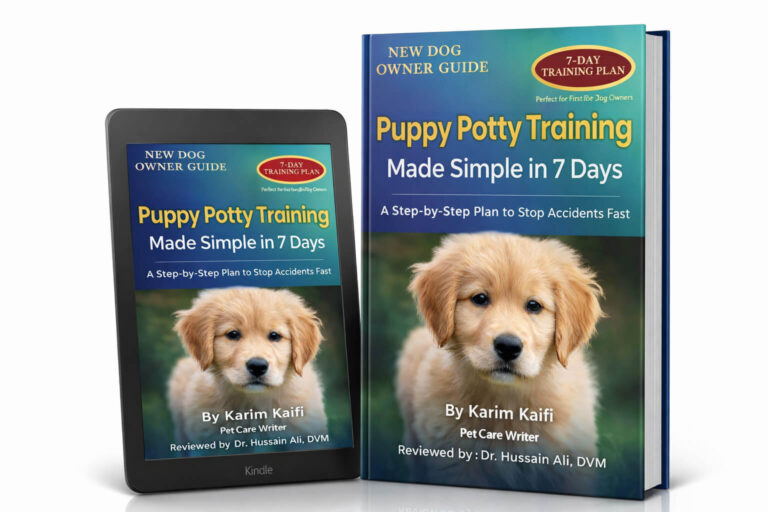
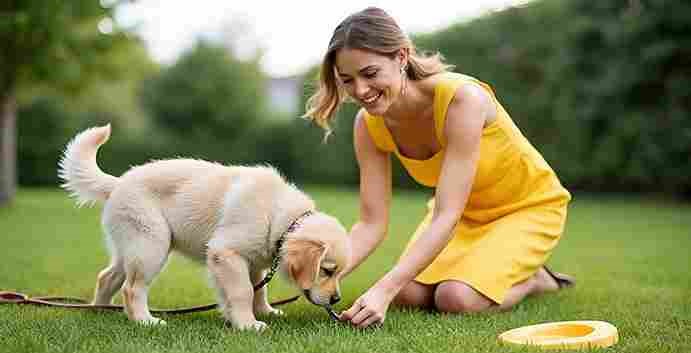
Is it possible to potty train a puppy in 7 days? Yes, you can teach a puppy how to go to the bathroom in as little as seven days if you are persistent, patient, and use positive reinforcement. They learn faster when you train them in a method that aligns with their natural biology, such as their bladder size, sleep cycle, and habits influenced by smell.
QUICK SUMMARY
- Most puppies can “hold it” for an hour for every month they are old.
- After they eat, nap, and play, take them outside.
- Give treats or praise for good behavior every time.
- Pick a different spot for the potty, like grass, pads, or a balcony.
- Regular detergents don’t get rid of smells. Pick cleansers that have enzymes in them instead.
- For the best results, stick to a plan for seven days.
Table of Contents
Why 7 Days Is Possible
A lot of dog owners think that it is difficult, it takes months to train a puppy to use the bathroom, but puppies learn quickly. They naturally want to keep their sleeping and eating areas clean, which makes them ready for potty training. Research on dog behavior indicates that repetition and consistency in the initial 8–16 weeks establish enduring habits. Most puppies can learn to use the potty reliably in just one week if they also get surface preference training and positive reward.
Another important reason is that their dopamine-driven reward response makes them feel good when they go to the bathroom in the proper place.
🗓️ Step-by-Step: Potty Training in 7 Days
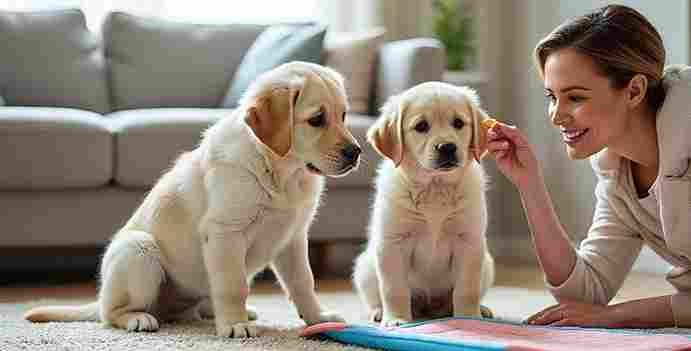
Day 1: Set Up for Success
The first thing you need to do is set up the correct space. Choose one place for your dog to go to the bathroom, such the yard, balcony, or pee pad zone. Dogs do better when things stay the same, so don’t change the area. Get your pads, poop bags, enzymatic cleanser, and a stash of little training goodies ready.
👉 Science note: Puppies are born with a natural tendency called den cleaning, which means they don’t want to dirty their nest. Setting up a potty site outside of where they eat and sleep takes advantage of their habit and accelerates training.
YOU MIGHT LIKE THIS: Can Dogs Eat Cucumbers? Vet-Reviewed Guide + Personal Experience
READ MORE: How Long Can I Keep My Cat Alone? Safe Guidelines Backed by Experts
Day 2: Learn the Schedule
Puppies don’t know how to “hold it” yet. A 2-month-old puppy needs to go to the bathroom every 2 hours, while a 3-month-old can hold it for 3 to 4 hours. It’s important to follow their internal cycles.
Most puppies need to go:
- Most puppies need to go after meals because digestion makes them want to.
- After naps, the bladder fills quickly while resting
- After playing, it typically makes them want to pee.
👉 Tip as pet owner: Keep a potty log. Over 2–3 days, you’ll spot patterns that let you predict when accidents might happen.
You might like this: how to crate train a puppy at night without accidents
Day 3: Redirect, Don’t Punish
Things go wrong sometimes. If you see your dog laying down gently guide them to the potty spot. Don’t shout, push their nose into it, or punish them.
Science Fact: Studies suggest that punishment raises cortisol levels, which makes it harder to learn and can cause habits like hiding to go to the bathroom. Positive reinforcement, on the other hand, releases dopamine, which makes the puppy want to do the right thing again.
Day 4: Reinforce with Rewards

Your most effective tool is rewards. Give your dog little, soft goodies and say things like “Good potty!” when they do what you want. Give the treat right away after finishing—dogs learn by making connections right away.
👉 Hack for training: Every time, use a verbal cue like “Go potty!” Eventually, your puppy will learn to associate the word with the action, so you can “ask” them to go before bed, car rides, or visits.
👉 Science note: Research on operant conditioning in dogs shows that learning happens faster when rewards are given at the same time every time.
READ MORE: signs your puppy is adjusting to a new home
Day 5: Handle Accidents the Smart Way
Don’t worry, it’s usual for things to go wrong, especially in the first week. Use an enzymatic cleanser to clean the area. These cleaners break down the proteins in urine that normal cleaners leave behind.
👉 Why this is important: Your puppy’s nose is like a little detective. If a spot still smells like pee, they’ll think, ‘Oh, this is my bathroom!’ and head back there. The tricky part? Ammonia-based cleaners can smell just like urine to them, so instead of fixing the problem, it can actually tempt your puppy to have more accidents in the same place.
Tip: Keep a dirty pad or paper towel in the potty area. Puppies are naturally drawn to places that smell like them, which helps them stick to their habits.
Day 6: Build Independence
As your puppy starts to get used to it, slowly back away and let them go to the potty location on their own. Being independent makes it confident.
At this stage, you should slowly lengthen the time between potty breaks, depending on how old the puppy is. A 3-month-old, for instance, might last 4 hours during the day.
👉 Science fact: As puppies become older, their sphincter and bladder muscles get stronger. Adding small amounts of work to their schedule helps these muscles get stronger on their own.
Day 7: Consistency & Routine
The last step is discipline, for you, not for the puppy. Stick to a regular schedule for feeding, sleeping, and playing. Dogs do best when their schedules are predictable, and their bathroom habits will follow suit.
Pro tip: Puppies often give “potty signals” (sniffing, circling, whining near the door). By paying close attention, you’ll learn these signals faster, which will cut down on accidents.
By the end of the week, most puppies will either wait for you to take them or go to the potty spot on their own.
Bonus: Potty Training an Adult Dog
Adult dogs may have better control over their bladders, but they can still benefit from the same training technique. They might also have old behaviors, such going to the bathroom inside if they were in a shelter.
👉 Follow the same 7 steps, but give yourself 2 to 4 weeks instead of 1. The good news is that it will be easier to train them once they “get” the idea because they can hold it longer.
Science Behind Puppy Potty Training
Let’s look at the biology behind toilet training:
- Bladder control: Puppies can hold it for around one hour for every month of their age. Most of them last a little longer overnight because there isn’t as much activity.
- Circadian rhythm: Puppies’ sleep and digestive cycles naturally match their desire to go to the bathroom. Training with these rhythms gets benefits fast.
- Surface preference: Dogs have preferences for surfaces, such as grass, pads, and gravel. Showing them early on keeps them from getting confused later..
- Reward response: Positive reinforcement releases dopamine, which improves memory and speeds up learning.
- Scent memory: Puppies use scent as a map. Proper cleaning prevents re-soiling in the wrong places.
👉 Citations:
- American Kennel Club (AKC): Potty Training Basics
- Veterinary Partner: House Training Puppies
- Journal of Veterinary Behavior: Studies on positive reinforcement in canine learning.
FAQs
1. Can a puppy really be potty trained in 7 days?
Yes, you can build strong foundations in 7 days. Full reliability may take a few weeks, depending on age and consistency.
2. What if my puppy keeps peeing inside?
This often means the schedule isn’t tight enough. Increase potty breaks and reward heavily when they use the right spot.
3. How long can a 2-month-old puppy hold its bladder?
Around 2 hours max, sometimes less after excitement or water intake. At night, expect 2–3 wake-ups.
4. Should I use pee pads or grass?
Both work. If you plan to train your dog outdoors long-term, introduce grass early. Pads are better for apartment living.5. 5. 5. Why shouldn’t punish accidents?
Punishment creates fear and delays learning. Positive reinforcement accelerates training, fosters trust, and mitigates long-term anxiety.

Karim Kaifi is an experienced pet owner and writer. He shares practical, research-backed advice based on over 10 years of caring for cats and dogs.
Related posts:
 How to Crate Train a Puppy at Night Time: A Complete Guide for Pet Owners
 How to Take Care of a Pitbull Puppy: A Complete Guide for New Owners
 How to Help a Puppy Adjust to a New Home: A Full Guide For New Pet Owners
 How Often Should U Wash a Puppy? Complete Guide for Dog Owners
 How Long Can I Leave My Dog Alone?What experts say