
Pet owners often want to know, “Can dogs get the flu from people?” The basic answer is no. Dogs normally can’t catch the seasonal flu (influenza A or B) from people since human flu viruses don’t easily transmit to dogs. In the same way, people can’t get dog flu from their pets, since dogs have different influenza strains, such as H3N8 and H3N2. However, dogs can catch a serious respiratory virus called Canine Influenza, which spreads rapidly between dogs. The flu is not zoonotic, meaning it is not transmitted from animals to humans in this way, but some other infections, such as ringworm or certain stomach viruses, can spread across species. This is why excellent hygiene is always necessary.
Quick Summary
- Human-to-dog flu transmission is extremely rare.
- Dogs usually catch flu only from other infected dogs.
- Watch for symptoms such as coughing, sneezing, fever, or low energy.
- Keep things clean and avoid face contact when you’re sick.
- Contact your veterinarian if symptoms persist for more than 48 hours.
Table of Contents
How Human Flu Viruses Differ From Dog Flu Viruses

Human flu and dog flu are caused by different virus strains, which is why they rarely spread between people and dogs. Dog flu—most often linked to the H3N2 and H3N8 strains—spreads mainly from dog to dog, especially in places where many dogs are close together, like dog parks, kennels, daycares, or grooming salons.
It’s very unlikely that a person would pass the flu to their dog, but practicing good hygiene is still a smart habit. According to the AVMA, there’s currently no evidence that human flu viruses naturally infect dogs.
Key Points
- Dogs don’t often get the flu from people.
- Dog flu spreads through coughing, sneezing, and shared surfaces.
- Owners can reduce risk with basic hygiene: washing hands, disinfecting bowls, and covering coughs.
In short: Your dog seldom catches your flu.
What Are H3N2 and H3N8?
H3N2 and H3N8 are two types of canine influenza, also called dog flu. These viruses affect dogs and cause flu-like symptoms. Even though they sound like human flu viruses, dogs usually cannot catch the flu from people, and people rarely get dog flu from dogs.
What Is H3N8 in Dogs?
H3N8 was the first dog flu virus found in dogs in 2004. It came from horse flu and later spread to dogs. This virus spreads easily where many dogs are together, such as dog parks, shelters, boarding kennels, and grooming centers.
Common H3N8 dog flu symptoms include:
- Coughing
- Sneezing
- Runny nose
- Fever
- Low energy
Most dogs recover in two to three weeks, but puppies and older dogs may get sicker.
What Is H3N2 in Dogs?
H3N2 appeared later and likely came from bird flu. It is more contagious than H3N8 and can live longer on surfaces like toys, food bowls, and leashes. In rare cases, cats can also get H3N2.
Common H3N2 symptoms in dogs include:
- Ongoing cough
- Thick nasal discharge
- Fever
- Tiredness
- Poor appetite
YOU MIGHT LIKE THIS: How to Help a Puppy Adjust to a New Home: A Full Guide For New Pet Owners
Can My Dog Get Sick If I Have the Flu?
Dogs aren’t likely to catch the flu from people, but your illness can still affect them in other ways. Dogs are very sensitive to changes in your routine, energy level, and home environment. When you’re sick, stressed, less attention, or even small changes in your mood can lead to subtle shifts in your dog’s behavior or digestion.
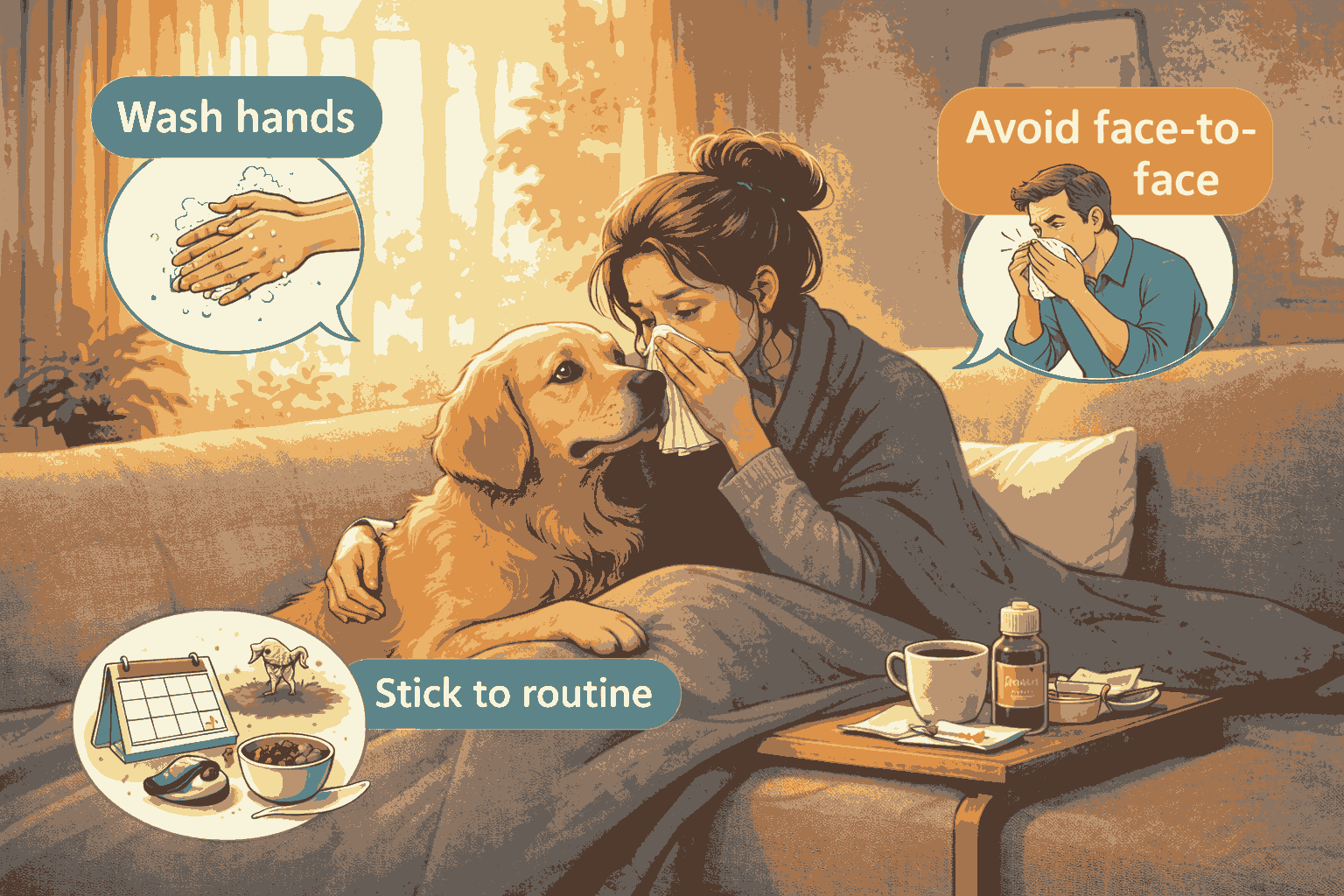
Practical Tips
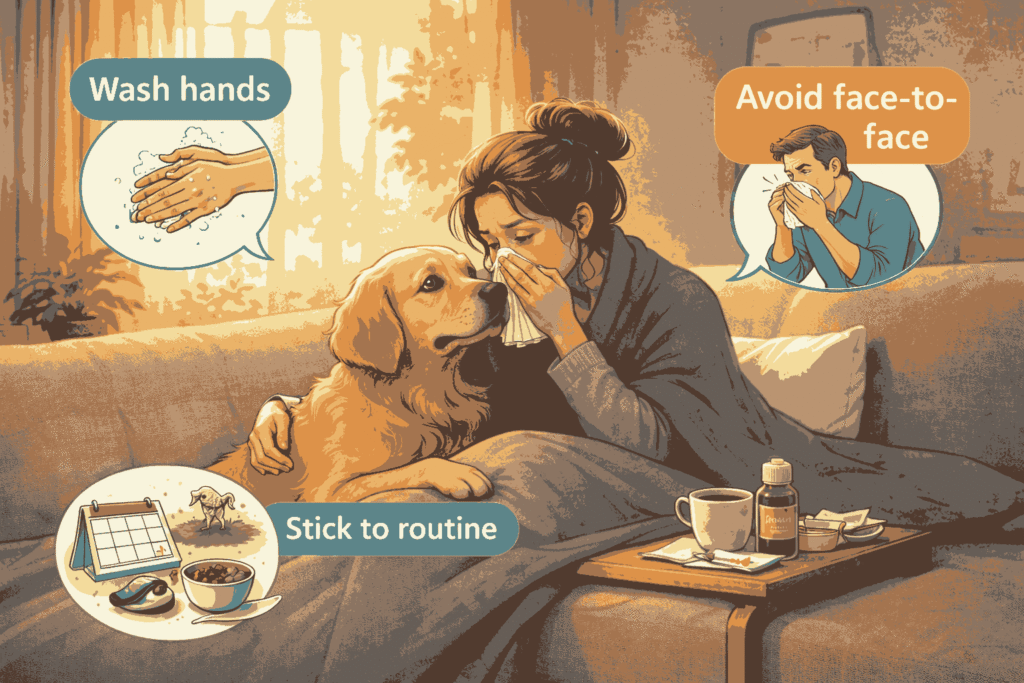
- Wash your hands before feeding or handling toys.
- Avoid face-to-face contact while sneezing or coughing.
- Maintain your dog’s daily routine to minimize stress.
Simple rule: You can cuddle your dog — just avoid sneezing or coughing directly on them.
Symptoms of Dog Flu to Watch For
Dogs can catch canine influenza from other dogs. Symptoms usually appear within 2 to 4 days after exposure. Some dogs may only develop a mild cough, while others can become more seriously ill, with signs like fever or even pneumonia. According to VCA Hospitals, common symptoms of dog flu include coughing, a runny nose, and low energy.
Symptoms
- Coughing, gagging, or “honking” sounds
- Runny nose, watery eyes, or sneezing
- Fever, low energy, or reduced appetite
If your dog shows these signs, contact your vet to rule out other respiratory infections or allergies.
How to Protect Your Dog During Flu Season
Good hygiene and simple precautions can help lower the risk of illness. Places like dog parks, boarding facilities, daycares, and grooming salons are areas where dogs are more likely to get sick. The AKC recommends that dogs who spend a lot of time around other dogs consider getting the canine flu vaccine.
Preventive Measures
- Regularly clean bowls, toys, beds, and other surfaces.
- Don’t touch pets that are coughing or sneezing.
- Talk to your vet about whether the canine flu vaccine is good for your dog.
Think of it as protecting your dog as you protect yourself during flu season.
READ MORE: How Often Should U Wash a Puppy? Complete Guide for Dog Owners
Best Ways to Care for Your Dog If You’re Sick at Home
Your dog won’t catch your illness, but your sickness can still affect their daily routine. Dogs notice changes in your energy and schedule, which may change how often they eat, exercise, or feel comfortable during the day
Tips for Home Care
- Keep spaces clean and well-ventilated.
- Avoid sharing pillows or close sleeping spaces.
- Maintain regular feeding and walking schedules.
- Wash your hands before giving treats or meals.
Rule of thumb: Keeping yourself clean protects your dog from secondary germs.
My Experience
Last winter, I caught the seasonal flu, and my German Shepherd realized that I wasn’t feeling well. I continued her regular feeding and brief walks, and I cleansed my hands before giving her food or touching her toys. Even though she was curious and affectionate, I didn’t want to sneeze in her face. She kept well and cheerful by taking these basic precautions, and my flu didn’t impact her at all. This taught me that the best way to keep your dog safe during flu season is to stick to a schedule and keep them clean.
When You Should Call the Vet
Most dogs recover quickly from mild flu symptoms, but some may need to see a veterinarian. Puppies, older dogs, and especially brachycephalic breeds like Bulldogs and Pugs are more likely to have complications.
Call Your Vet If You See
- Call Your Vet If You See Your Pet Breathing Hard or Fast
- Not eating or drinking for more than 24 hours
- Thick yellow/green nasal discharge
- Symptoms worsening or lasting longer than 48 hours
Early veterinary care can prevent serious complications like pneumonia.
FAQs
Q1: Can my dog catch the flu from me?
A: Very unlikely. Human flu viruses rarely infect dogs. Most canine respiratory illnesses come from other dogs.
Q2: How do I know if my dog has the flu?
A: Watch for coughing, nasal discharge, watery eyes, fever, lethargy, or reduced appetite.
Q3: Should I vaccinate my dog against the flu?
A: If your dog interacts with other dogs in high-risk environments, ask your vet about the canine influenza vaccine.
Q4: How do I protect my dog while I’m sick?
A: Practice good hygiene, avoid sneezing/coughing on your dog, maintain routine, and keep areas clean.

Karim Kaifi is an experienced pet owner and writer. He shares practical, research-backed advice based on over 10 years of caring for cats and dogs.