
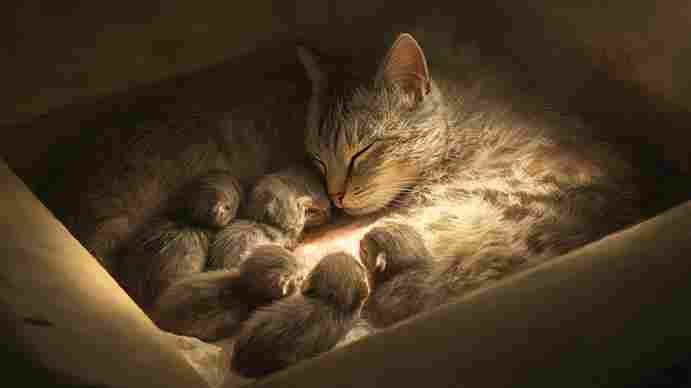
When a cat goes into labor, her body prepares to deliver kittens through a natural process called queening. Labor begins with noticeable behavioral and physical changes, such as restlessness, nesting, and increased grooming. Within a few hours, contractions start, followed by the birth of kittens. Most cats manage labor instinctively, but understanding the signs and stages helps you support her safely and recognize when to seek veterinary care.
Quick Summary
- Cat labor has three stages: early contractions, kitten delivery, and placenta expulsion.
- Behavioral signs include nesting, restlessness, and vocalization.
- Physical signs include swollen nipples and a drop in temperature.
- Kittens are born 10–60 minutes apart.
- Call a vet if labor lasts too long, bleeding is excessive, or kittens don’t appear after straining.
Table of Contents
Understanding the Stages of Cat Labor
According to VCA Animal Hospitals, PetMD, and the MSD Veterinary Manual, feline labor—also called queening—typically lasts 6–12 hours, though it can extend up to 24 hours for first-time mothers or large litters.
Hormones such as oxytocin, relaxin, prostaglandins, and progesterone control this process, ensuring proper contractions and kitten delivery.
Stage 1 – Early Labor (Preparation)
This first stage signals the onset of uterine contractions as the cervix begins to dilate.
It usually lasts 6–12 hours, and the queen’s behavior changes noticeably as she prepares for birth.
Behavioral and Physical Signs:
- Nesting: Searching for a quiet, secure place to give birth — an instinct triggered by hormonal changes.
- Restlessness and pacing: Due to increasing contractions.
- Vocalization: Frequent meowing or yowling shows discomfort or anticipation.
- Loss of appetite: Digestion slows as the body focuses on delivery.
- Excessive grooming: Especially around the vulva, as clear discharge begins.
- Swollen mammary glands: Nipples appear pink and enlarged (“pinking up”).
- Temperature drop: When body temperature falls below 100°F (37.8°C), labor will likely begin within 12–24 hours, confirmed by Merck Veterinary Manual.
Read more: How to Care for a Pregnant Cat: Scientifically Proven Tips for Cat Moms
What You Can Do:
- ✔ Prepare a clean nesting box lined with soft, washable towels.
- ✔ Keep the space quiet, warm (around 85°F / 29°C), and dimly lit.
- ✔ Avoid stressing her — anxiety can delay labor by suppressing oxytocin.
Stage 2 – Active Labor and Kitten Delivery
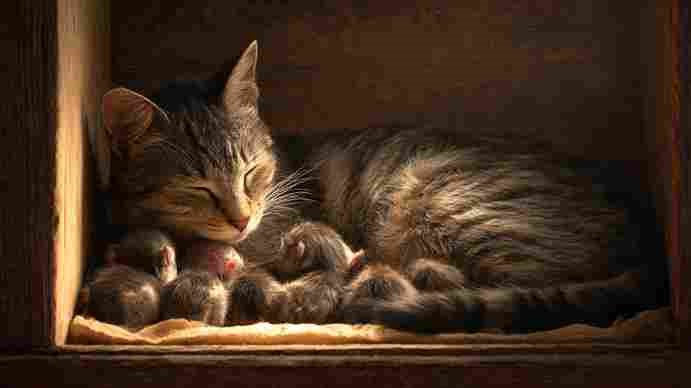
This is the main birthing stage. Strong abdominal contractions and visible straining occur as kittens are delivered, each enclosed in its protective amniotic sac.
What to Expect:
- Visible straining every few minutes.
- Vaginal discharge: Clear or slightly reddish is normal; thick, dark, or foul-smelling discharge needs veterinary attention.
- Kitten arrival: The first kitten may appear after 5–30 minutes of active pushing.
- Intervals: Subsequent kittens follow every 10–60 minutes, with rest periods of up to 2 hours between deliveries.
- Normal maternal behavior: The mother licks each kitten, chews the umbilical cord, and eats the placenta—this releases oxytocin, aiding milk flow and bonding.
Call your vet immediately if a kitten is stuck for more than 10 minutes or if bright red bleeding persists.
Stage 3 – Afterbirth and Recovery
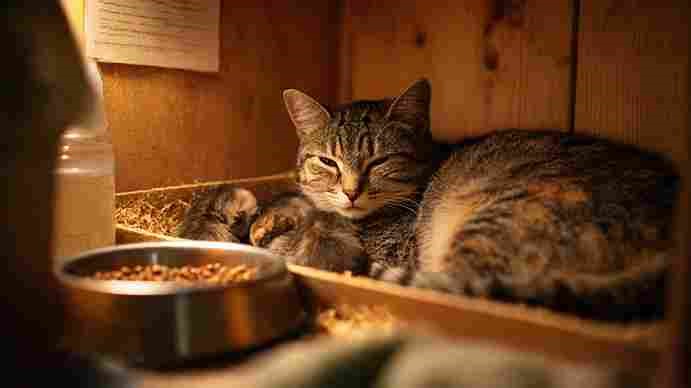
In this final stage, the mother delivers the placenta for each kitten and begins recovery.
Normal Signs:
- Mild bleeding or dark discharge for up to 24 hours.
- Nursing and purring: Stimulate uterine contractions and milk release.
- Appetite and alertness return soon after birth.
Watch For:
- Retained placenta: Fewer placentas than kittens.
- Foul-smelling discharge or fever.
- Weakness or refusal to nurse: May indicate eclampsia (low calcium) or infection.
If any of these occur, contact your veterinarian right away.
Scientific Insight
A 2023 veterinary study on feline reproduction found that hormones like oxytocin, relaxin, and prostaglandins play vital roles in uterine contractions and placenta delivery (PubMed – NCBI).
These biological mechanisms ensure that each kitten is safely delivered and the queen’s body returns to normal post-birth.
YOU MIGHT LIKE THIS: How Can You Stop a Cat from Scratching the Furniture?| Real Solutions That Work
What You Should Prepare Before Cat Labor
If you get ready properly, your cat will have a safe and easy delivery.
The American Veterinary Medical Association (AVMA) and Cornell University College of Veterinary Medicine say that the most important thing to do during feline labor is to keep the cat calm. Stress can stop contractions by lowering oxytocin, the hormone that makes the uterus contract and milk flow.
Cats naturally look for safe, dark, and quiet places to have their babies. Preparing a cozy space ahead of time will help her feel safe.
Supplies Checklist
Having the right items ready before labor begins can make all the difference:
- To clean the nesting box, use a strong cardboard or plastic box lined with soft, washable towels.
- Gentle heat source —A heating pad under one side of the box or a hot-water bottle wrapped in cloth keeps the temperature around 85°F (29°C).
- Extra clean towels — For drying newborn kittens if the mother doesn’t do so quickly.
- Sterile scissors and gloves that can be thrown away—only use these if you have to cut the umbilical cord (which is very rare).
- Veterinarian’s emergency number — Keep it easily accessible in case of complications.
Preparation Tips
- Early on, show them where to nest: Set it up at least a week before the due date so your queen can get used to it.
- Choose a calm location: Keep her box in a quiet, private, dimly lit room away from household noise.
- Keep visitors and pets to a minimum. Too much activity or new smells can make her nervous and slow down labor.
- Maintain steady temperature: Avoid cold drafts or overheating — kittens can’t regulate body temperature for the first 3 weeks.
- Provide essentials nearby: Keep water, food, and a litter box close to her nesting area but not inside it.
Why a Quiet Place Is Important
Studies in veterinary medicine show that stress increases cortisol levels, which can weaken uterine contractions and even pause labor temporarily (a condition known as uterine inertia). According to VCA Animal Hospitals, keeping the environment calm and quiet helps regulate these stress hormones and reduces the risk of complications like dystocia (difficult birth).
Quick Tip
A queen who is calm and well-prepared is more likely to have a smooth, natural birth.
Preparation reduces the need for human intervention — and ensures healthy kittens
When to Contact a Vet
Most cats give birth on their own, but some situations need immediate veterinary care.
According to PetMD, VCA, and ASPCA, a delay in medical attention can risk both the queen and her kittens.
Call your vet if:
- Labor lasts more than 24 hours.
- You see discharge, but no kitten appears after two hours.
- There’s excessive bright red bleeding.
- The cat shows severe distress or screams for more than an hour.
- She stops straining but still appears in pain.
- She abandons or ignores kittens after birth.
How to Care for Your Cat After Labor
Postpartum care makes sure that your cat gets better and the kittens stay healthy.
Afterbirth care steps:
- Keep the nesting area warm, clean, and quiet.
- Offer fresh water and high-calorie kitten food for energy and milk production.
- Don’t disturb her or move the kittens unless necessary.
- Monitor for steady nursing and regular breathing in kittens.
- Schedule a vet check-up within 24–48 hours to confirm all placentas passed and no infection is present.
FAQs
1. How long does a cat stay in labor?
Most cats are in labor for 6–12 hours, though large litters may take up to 24 hours.
2. What are the first signs my cat is in labor?
Nesting, restlessness, excessive grooming, loss of appetite, and a temperature drop below 100°F are clear signs.
3. Should I help my cat deliver kittens?
No, cats usually handle birth alone. Only assist if a kitten is stuck for more than 10 minutes or the mother is exhausted.
4. What color discharge is normal during cat labor?
Clear to reddish-brown discharge is normal. Thick, bright red, or smelly discharge needs a vet check immediately.
5. Can cats give birth at night?
Yes, many cats prefer nighttime when it’s quieter and darker.

Karim Kaifi is an experienced pet owner and writer. He shares practical, research-backed advice based on over 10 years of caring for cats and dogs.